Many homemakers experience flaky, dry, and rough skin after washing dishes because dish soap irritates their hands. This makes them feel self-conscious because their hands are no longer as smooth as they used to be. Therefore, in this article, Okula Vietnam will help you understand the causes and how to treat this condition. allergy to dish soap. Let's find out right away!
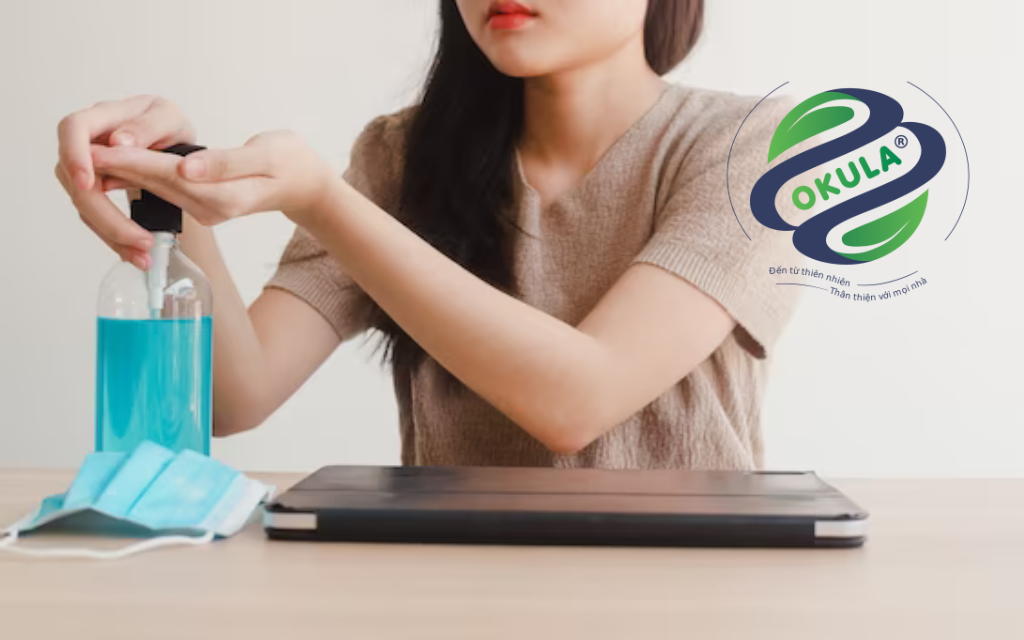
Causes of Dishwashing Liquid Allergies
One of the reasons your hands become chapped or flaky is that the chemicals in dish soap are corroding your skin. If not treated promptly, your hands will become increasingly itchy, develop blisters, and—worse yet—when the blisters burst, they’ll ooze yellow fluid and become infected. In addition, prolonged exposure to dish soap without wearing protective gloves can also cause dry skin, allergic reactions, and inflammation.
Symptoms of a dish soap allergy on the hands
The characteristic symptoms of an allergy to detergents (chemicals) in general, and an allergy to dishwashing liquid in particular, include:
- When exposed to dish soap, the hands may become red and may swell.
- Scaling on areas of skin affected by an allergic reaction
- Blisters appear when there is discharge
- A mild, prickling itch that gradually turns into an intense, burning itch
- Hives on areas of skin affected by an allergic reaction
- The skin becomes rough, dark, and cracked
Symptoms of dish soap allergy appear immediately after exposure or 20 to 48 hours later; in some cases of delayed reactions, symptoms may not appear for up to a week.
Repeated exposure to chemicals causes the outer layer of skin—the stratum corneum—to peel off. The inner layer of cells is destroyed by the toxic substances before it has a chance to mature, causing it to peel off in patches.
If this condition persists for a long time, it will cause the epidermis to lose moisture, leading to flaking, dry skin, cracking, and bleeding.
Therefore, as soon as they notice symptoms of dishwashing liquid poisoning, patients should seek medical attention promptly to receive appropriate treatment.
Tips for Treating Dish Soap Allergies at Home to Keep Your Hands Soft
To protect your hands from peeling and treat skin reactions caused by dish soap, the Okula Group shares effective and easy-to-follow remedies for dish soap allergies that you can try right at home.
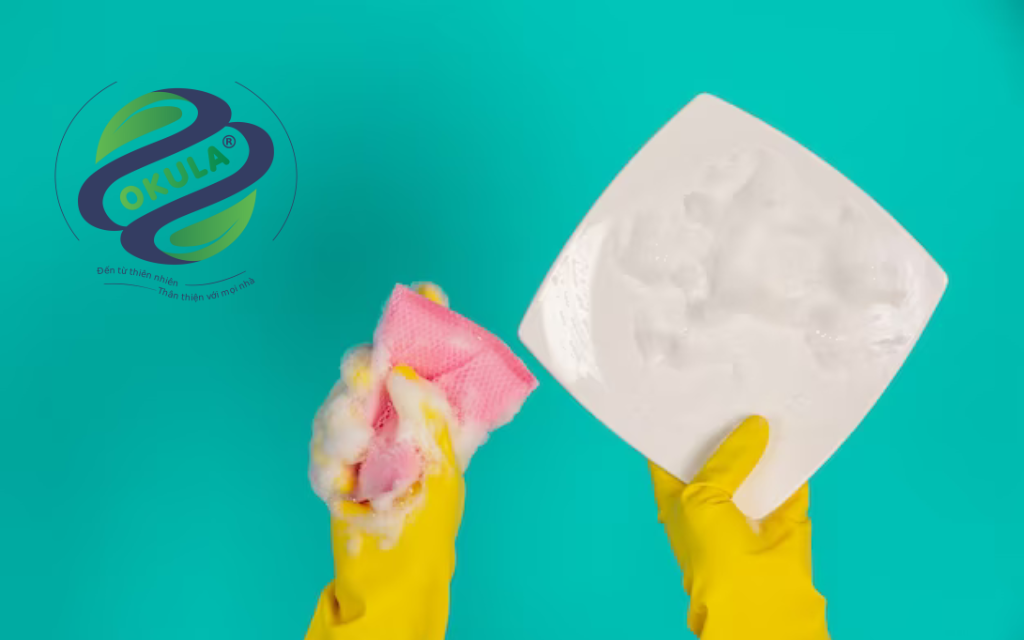
Wear gloves every time you wash dishes
To prevent your skin from coming into direct contact with the chemicals in dish soap, you should get into the habit of wearing gloves when washing dishes. This will help prevent chemicals from penetrating deep into your skin after prolonged use of dish soap, thereby preventing chapped and rough skin. Wearing gloves also helps keep your hands warm when washing dishes on cold days.
Use olive oil or coconut oil to treat hand skin irritation caused by dish soap
If your hands are allergic to mild dish soap, you can treat this condition with coconut oil to care for your hands. Coconut oil is primarily composed of fatty acids that help heal wounds and moisturize the skin. Using coconut oil regularly after each time you wash dishes will help you treat rough, calloused, and cracked skin.
In addition, you can use olive oil to gently care for the skin on your hands. Olive oil contains antioxidants that are extremely beneficial for the skin; they moisturize, maintain elasticity, and rejuvenate the skin.
Using Oats to Treat an Allergy to Dish Soap
Oatmeal is also a perfect choice for protecting your hands from allergic reactions to dish soap or chemicals. With oatmeal, your hands will become smoother thanks to its natural ingredients, such as fiber, vitamins, minerals, and antioxidants.
All you need to do now is mix the honey thoroughly with the oatmeal mixture and avocado oil, then gently massage the mixture into your hands and let it sit for about 10 minutes. The final step is to rinse it off thoroughly with water. If you’d like, you can also apply hand cream right afterward to enhance the skin’s recovery.
Hand Mask with Unsweetened Milk and Lemon
Unsweetened fresh milk is often used by women to make skin-whitening face masks. With its vitamins A, E, and D, fresh milk effectively nourishes the skin on your hands. The natural active ingredients in lemon help remove dead skin cells and effectively cleanse the skin. The natural active ingredients in the mixture of fresh milk and lemon will soothe, nourish, and brighten the skin on your hands.
Mix lemon juice with unsweetened fresh milk in a 1:10 ratio. Then apply the mixture all over your hands and massage them for about 3–5 minutes. As the mixture dries, continue applying more to your hands and massaging. Continue this process for about 25 minutes, then rinse your hands thoroughly with warm water. Do this about 2–3 times a week.
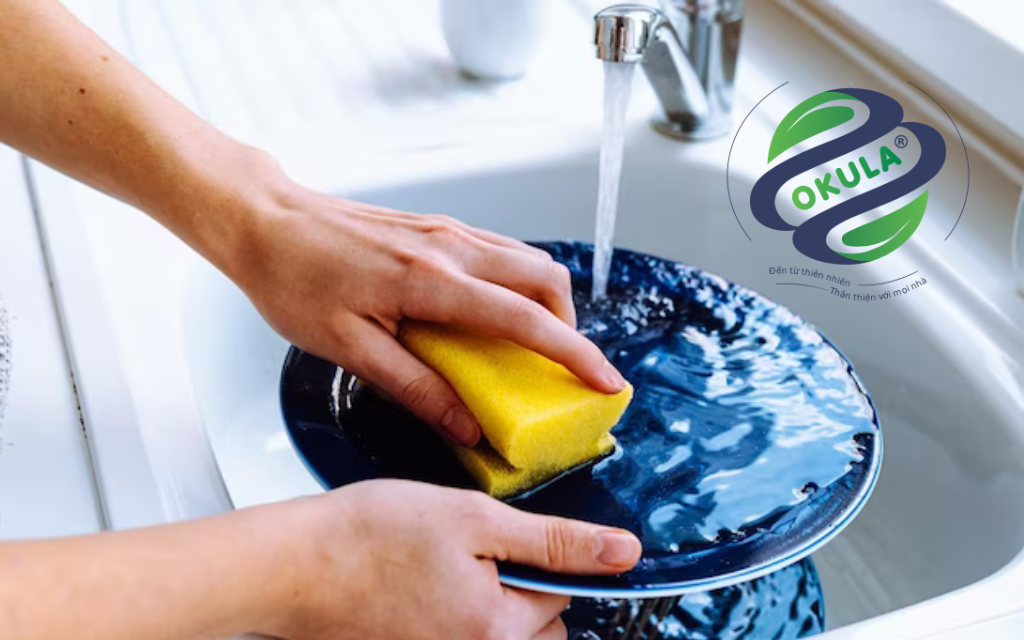
Use a gentle and natural dish soap
Choosing a dishwashing liquid with gentle, safe ingredients not only helps alleviate skin allergies caused by dishwashing liquid but also ensures the health of you and your family. Understanding consumers’ needs—and the desire for a dishwashing liquid that not only effectively removes all grease and oil but is also gentle on the hands—Okula has launched the Okula Green Tea-Scented Dishwashing Liquid and Okula Lemongrass-Scented Dishwashing Liquid. The products feature a soft pink packaging and offer many outstanding features, such as:
- Effectively removes stains and grease from dishes: This product thoroughly cleans greasy dishes from the very first wash, saving you time and effort.
- 100% plant-based cleaning ingredients: Okula dish soap with green tea and lemongrass scent utilizes proprietary technology from Okula, offering consumers a dishwashing liquid with 100% plant-based cleaning ingredients, as a testament to the product’s absolute safety. This product line, featuring 100% plant-based cleaning ingredients, effectively cleans dishes while being extremely gentle on users’ hands.
- Gentle and safe for the skin on your hands: Okula Dishwashing Liquid It contains 100%, a plant-based cleansing ingredient, which is why this product is gentle and mild on your hands. After using the product, your hands will feel even softer than before washing dishes. As a result, you won’t experience any allergic reactions to dish soap while washing dishes. This product line has been certified and safety-tested by the Central Dermatology Institute.
If you have a severe allergy to dish soap
If the condition is more severe, the doctor will prescribe topical or systemic anti-inflammatory medications. In addition, antihistamines to relieve itching and antibiotics may be prescribed if a secondary infection is present.
Note: These medications should only be used as prescribed, and you must strictly follow your doctor’s instructions.
As can be seen, an allergic reaction to dish soap is generally not particularly dangerous, but it causes significant inconvenience in users’ daily lives.
There are currently dishwashing products on the market that are safe for users. There are also dishwashing liquids made from natural ingredients that do not irritate the skin, so people with skin sensitivities to dishwashing liquids may want to consider switching from their current cleaning products.



 Vietnamese
 English
 Chinese